DIY Plans
Getting the dimensions right is a difficult part of building your own obstacle, especially if you haven't built many. What angle makes a good bank? How tall should a rail sit? How wide should a set of stairs be?
This free library gives you somewhere to start. Every plan comes with dimensioned drawings plus STL and CAD files, ready to download and build, so you know what the thing should look like before you cut any wood.
These are classic fingerboard obstacle shapes, drawn for building at home. Estimated dimensions are marked with ≈ on the drawings.
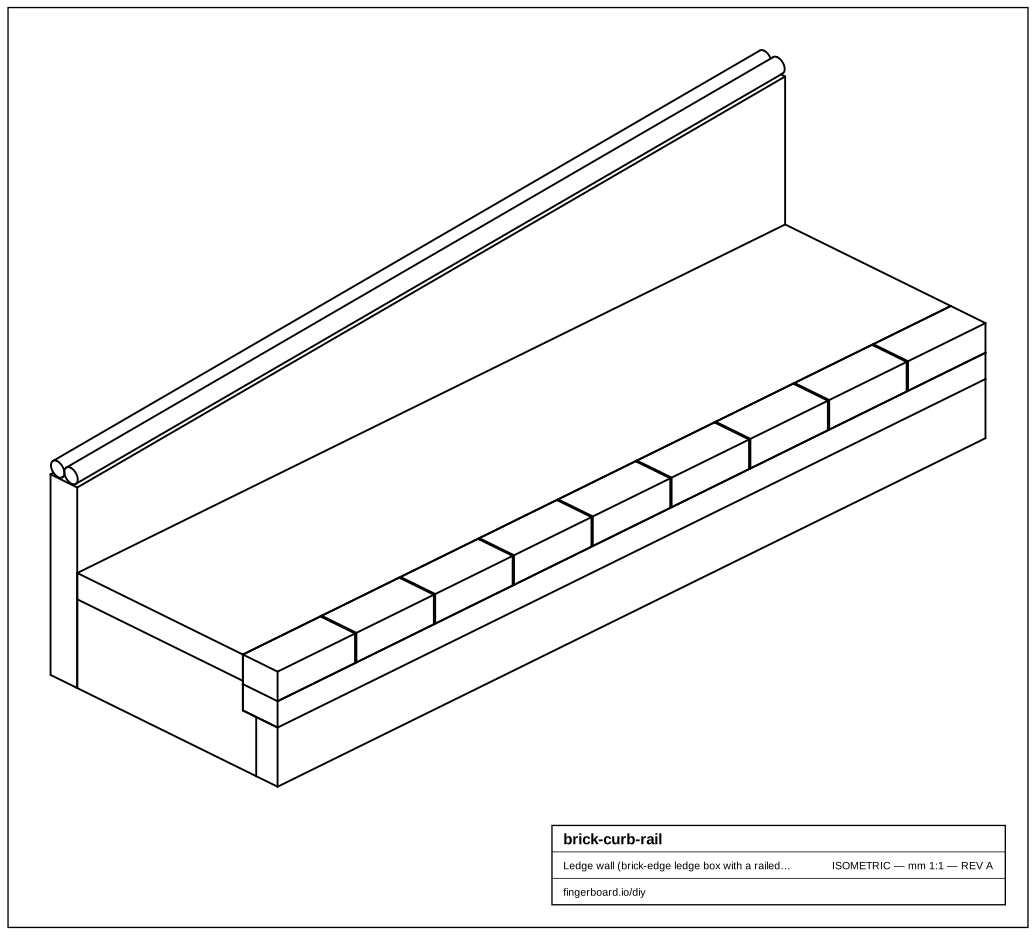
Brick Curb Rail
A small brick-coped curb with a tilted twin-tube rail along its back wall.
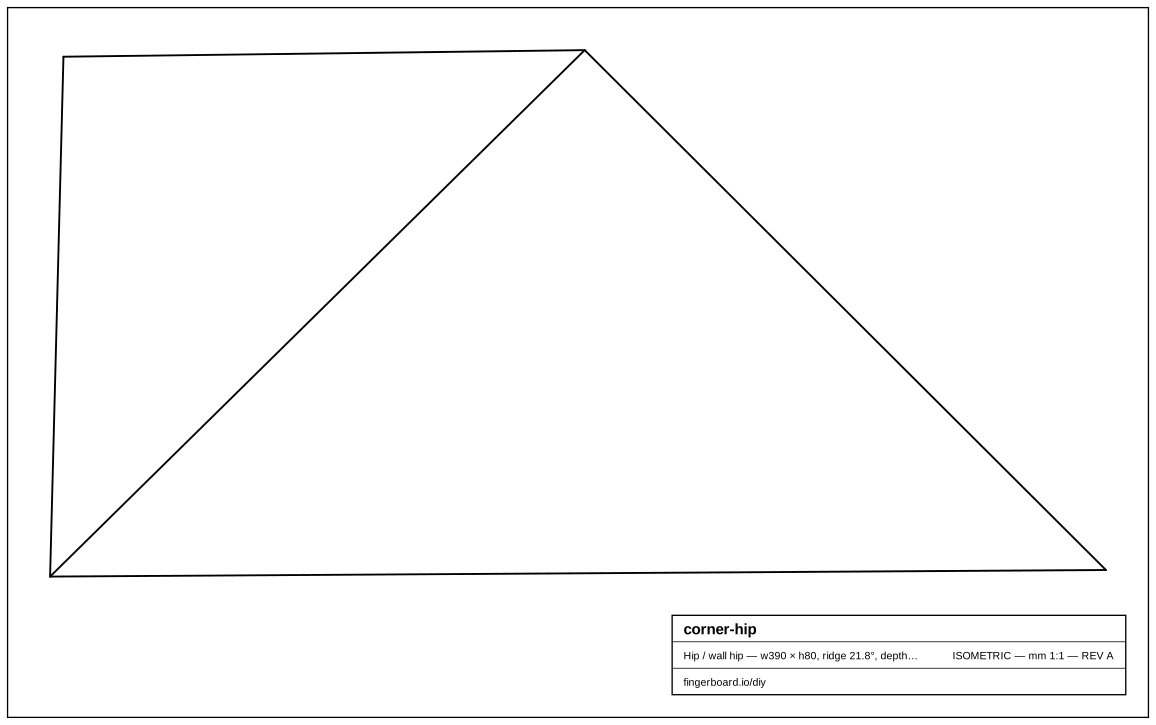
Corner Hip
A medium triangular hip — two banks meeting at a ridge — that sits against a wall.
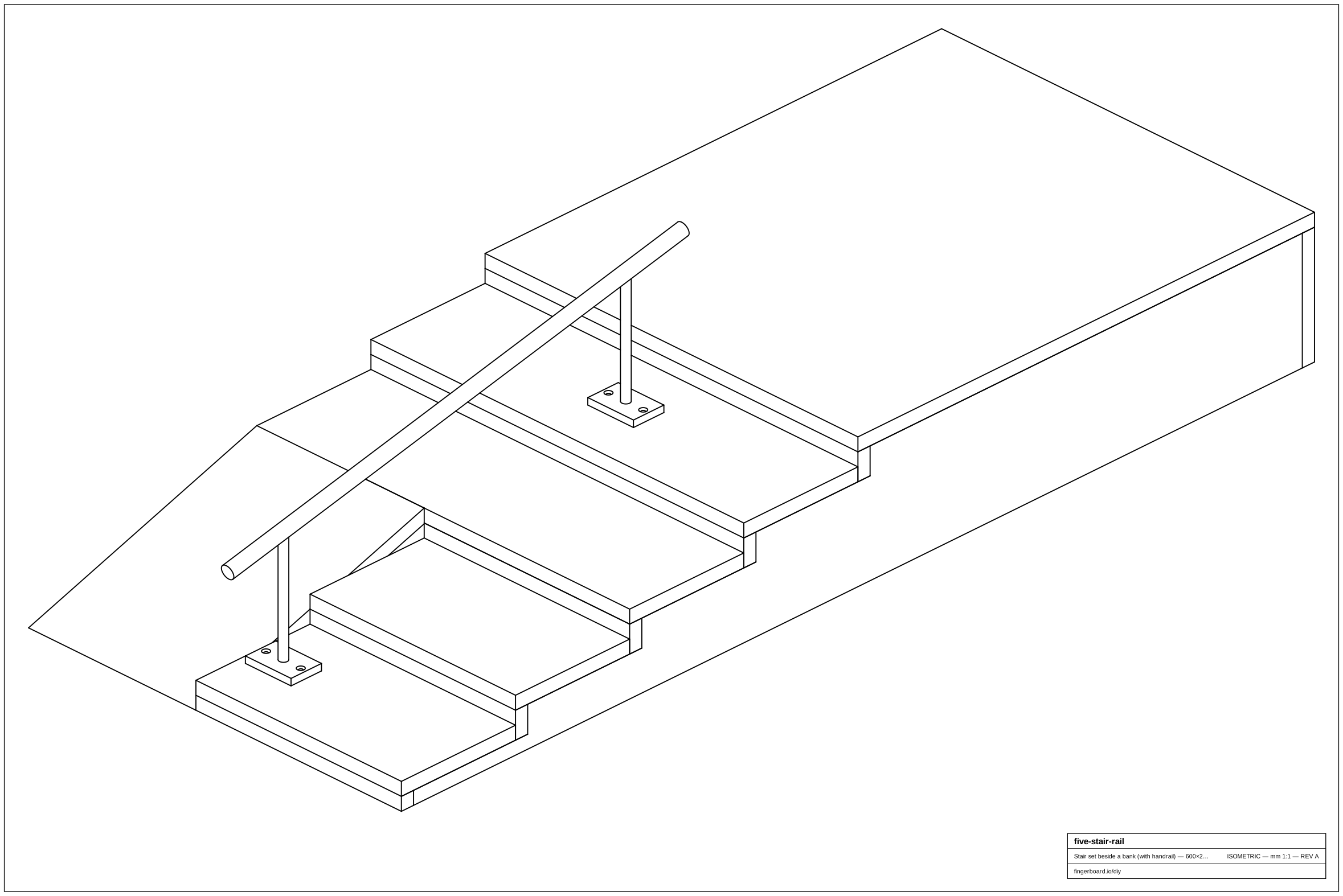
Five Stair Rail
A large five-step stair set with a center handrail and a smooth bank roll-up replacing the lower stairs on one side.
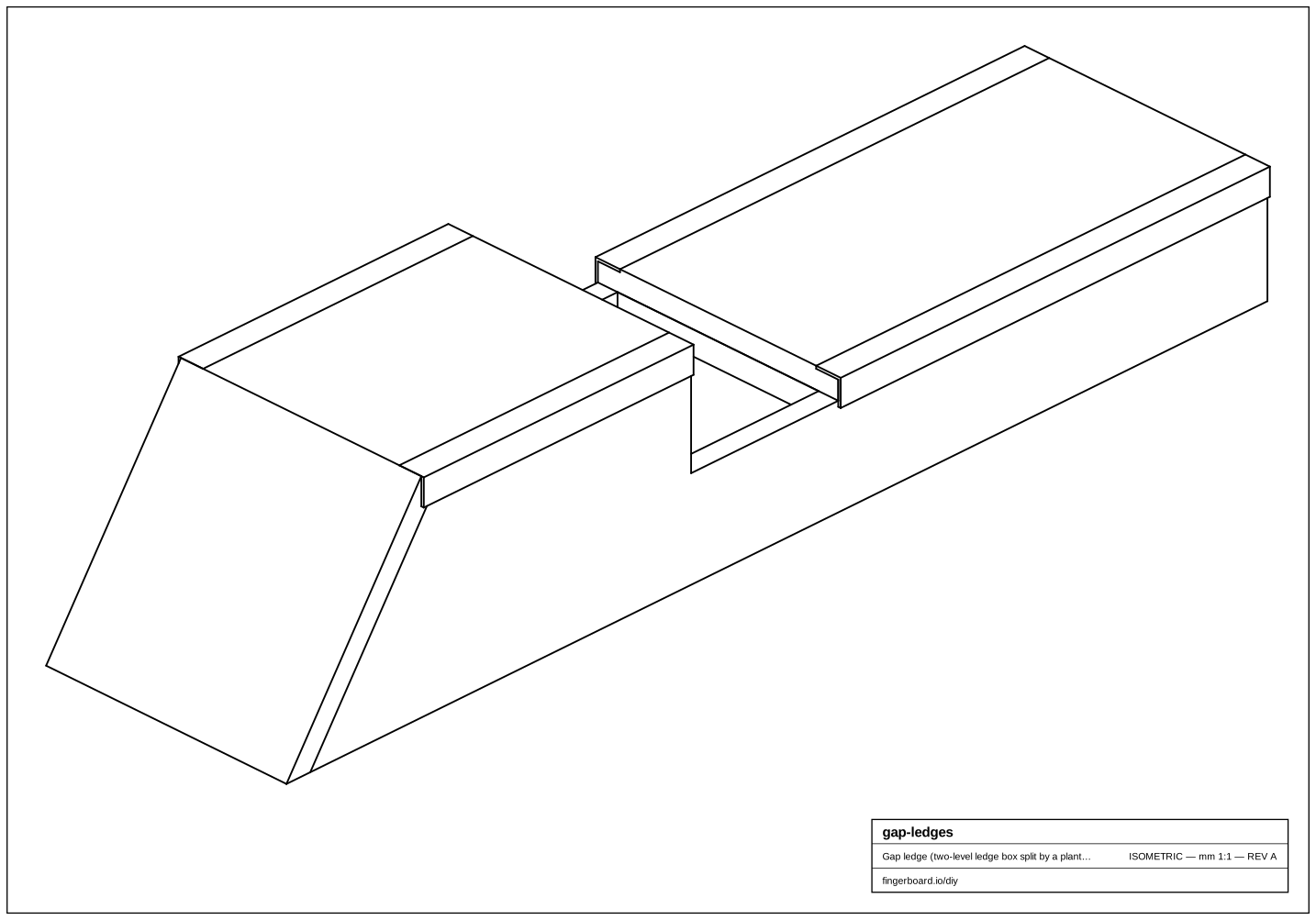
Gap Ledges
Two coped ledges at different heights to dabble back and forth between, split by an open gap planted with fake grass, with a steep bank at one end for wallies: an obstacle with no standard way to ride it.
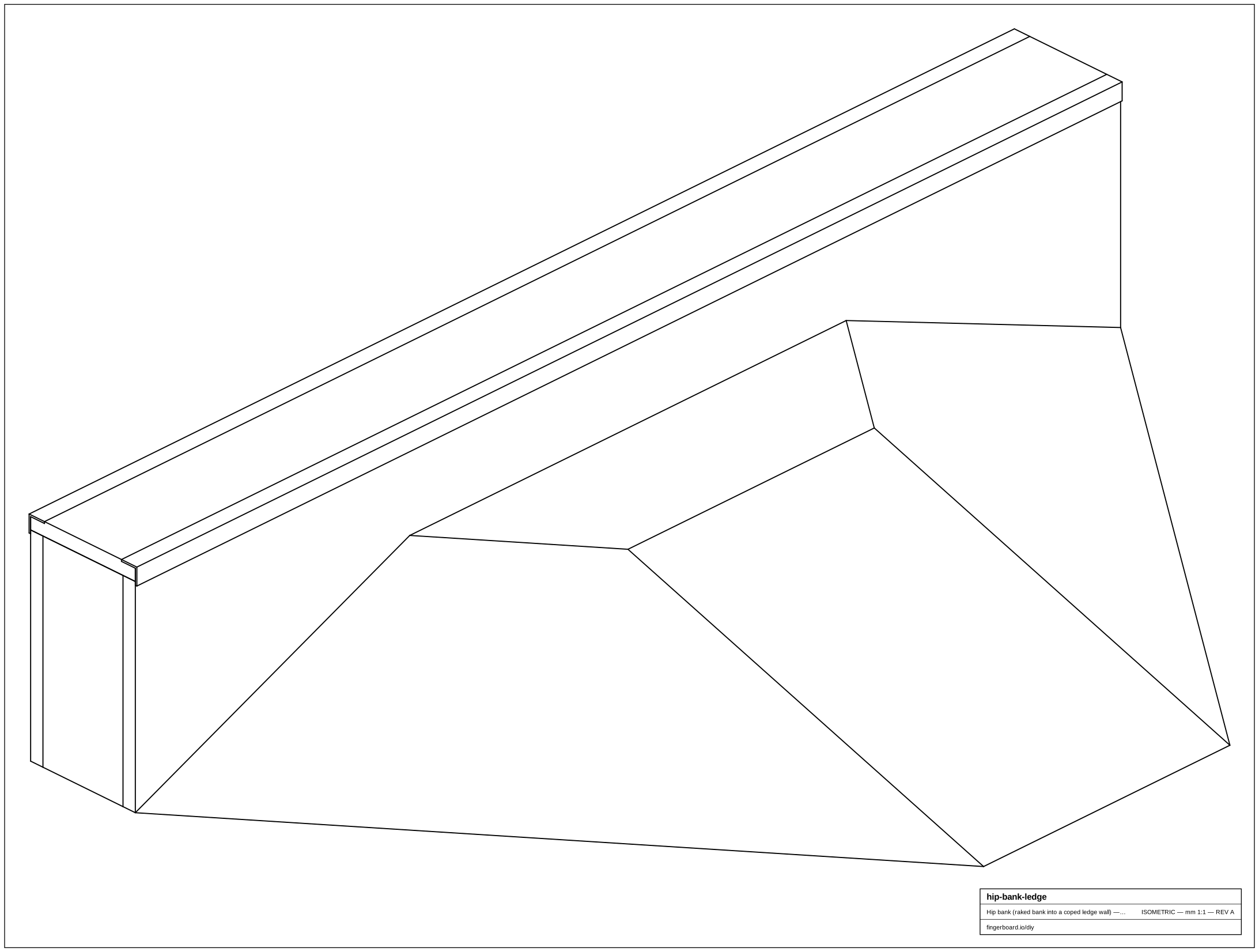
Hip Bank Ledge
A raked, hip-ended bank running up to a full-length coped ledge wall: ride up the 18° middle band or either 28° hip end, onto a 75 mm deck, to a 55 mm grind wall capped with twin 10 mm angle coping.
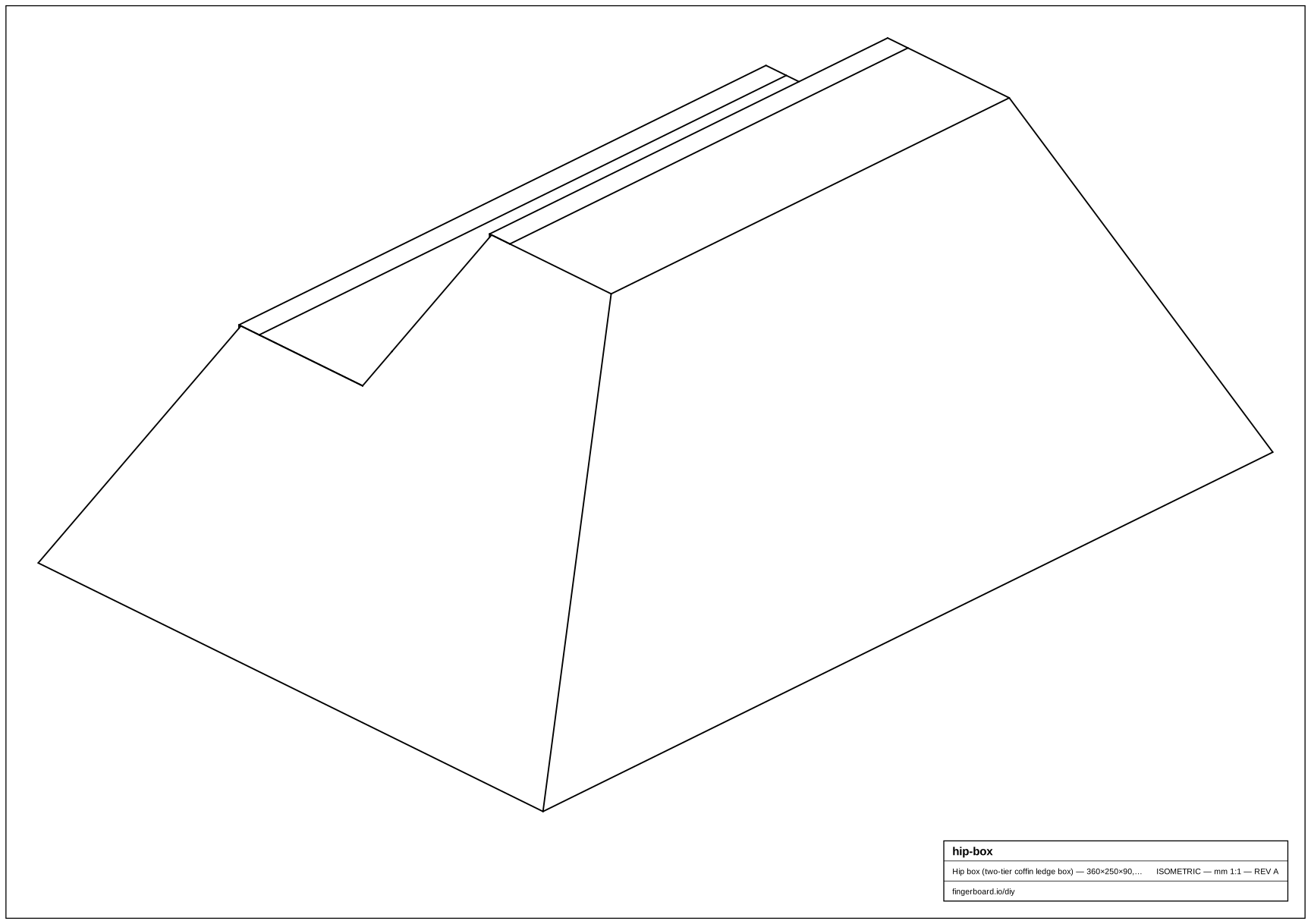
Hip Box
A medium two-tier box with two banks meeting at a hip — the long side bank and the coffin nose — over two coped ledges.
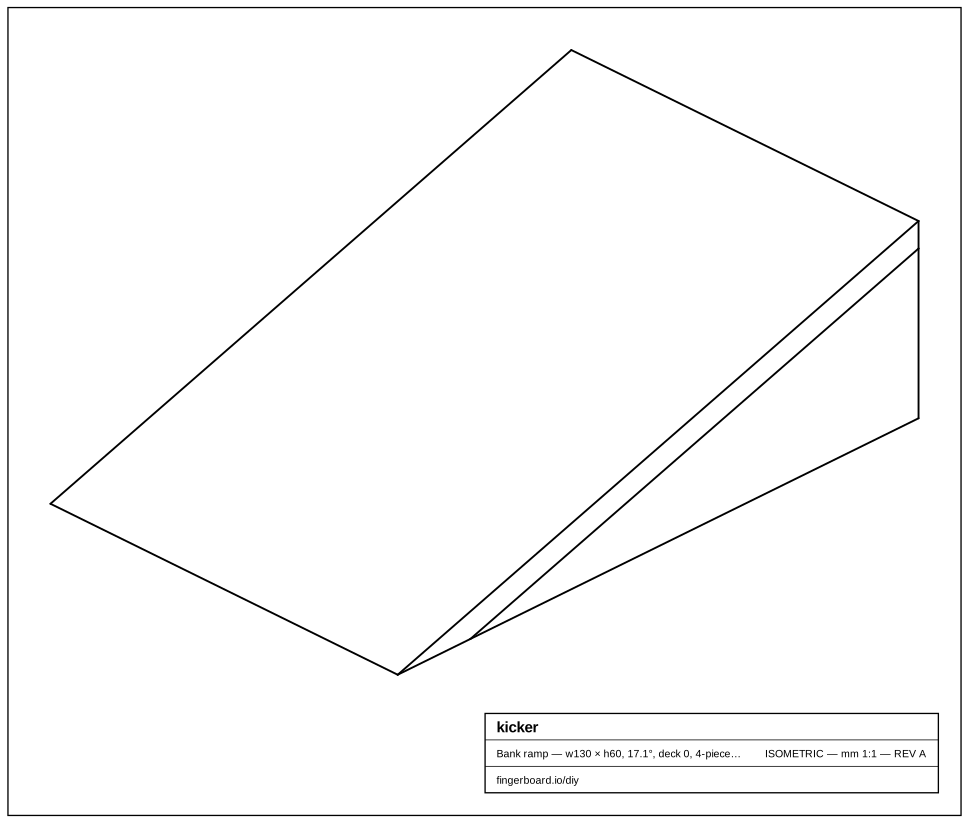
Kicker
A small knife-edge kicker.
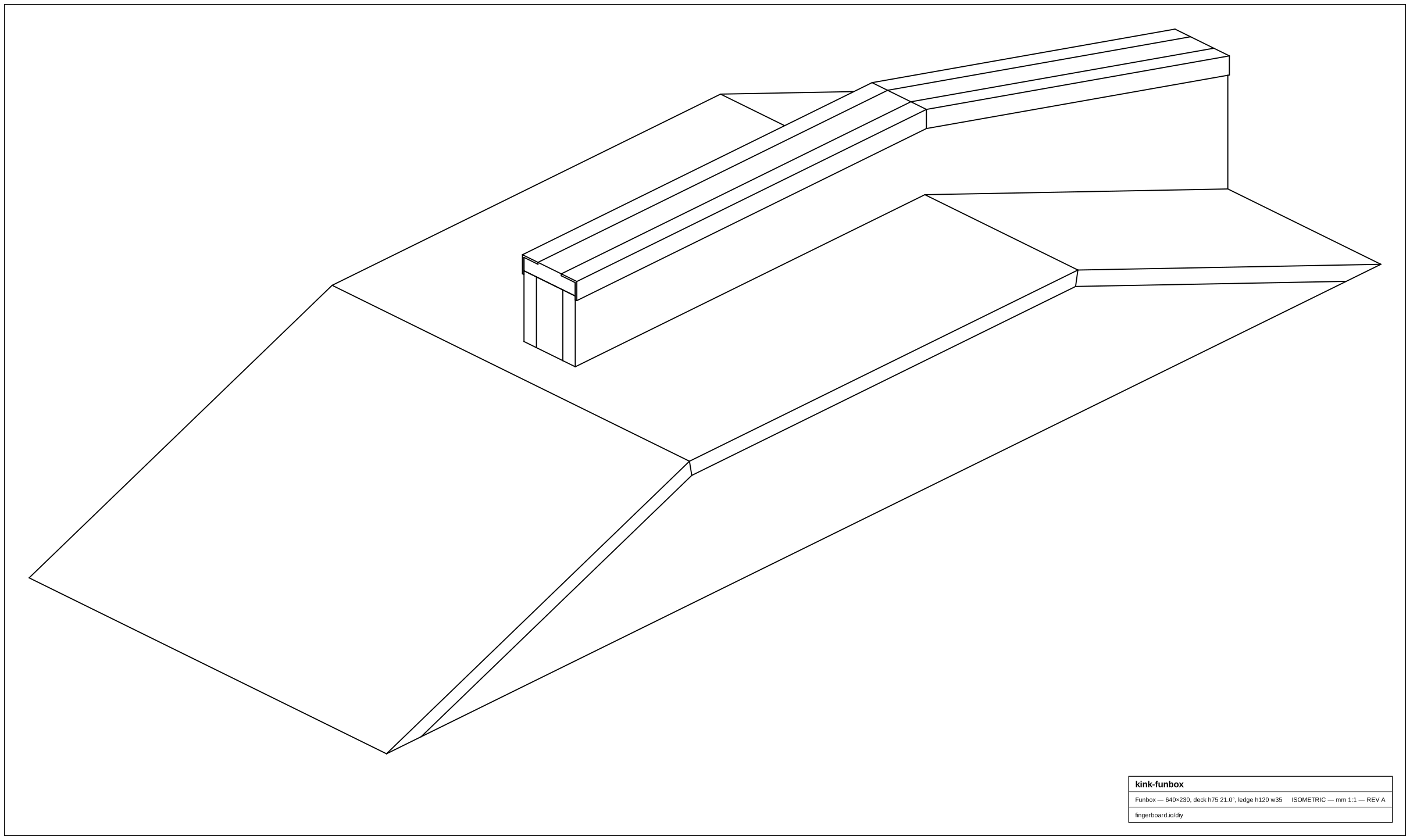
Kink Funbox
A large bank–deck–bank funbox with a coped kink ledge down the middle: a small gap at the square end, a kink down the back bank.
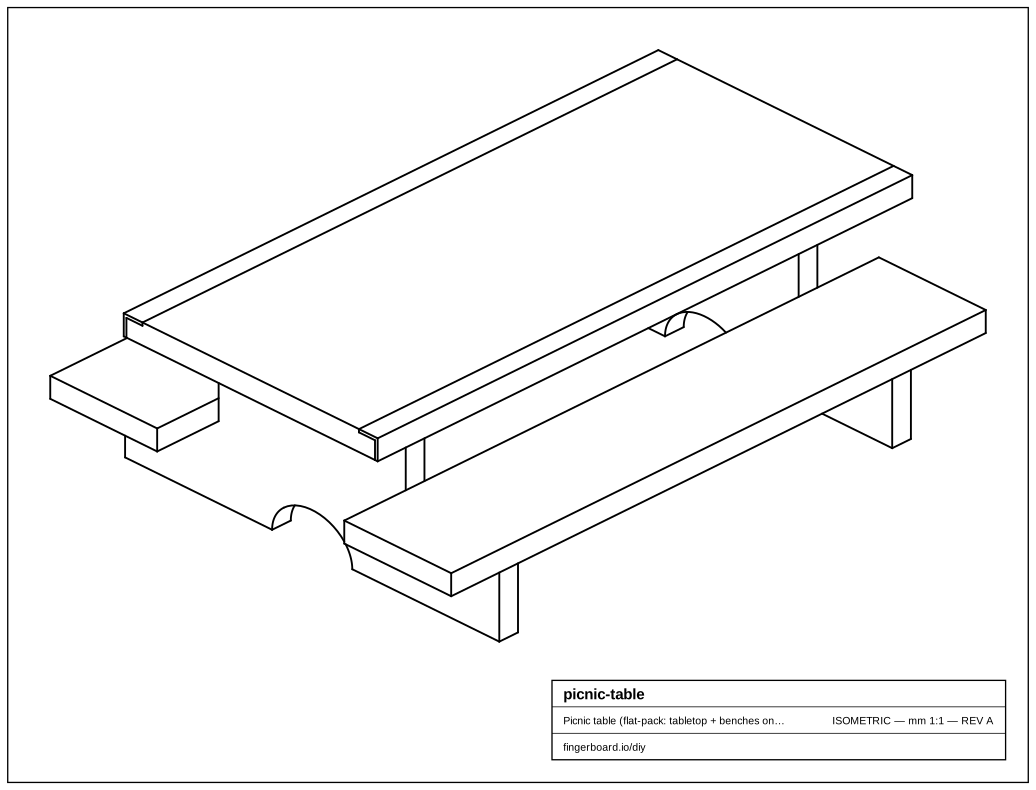
Picnic Table
A small picnic table on arched end-frames, coped along the tabletop.
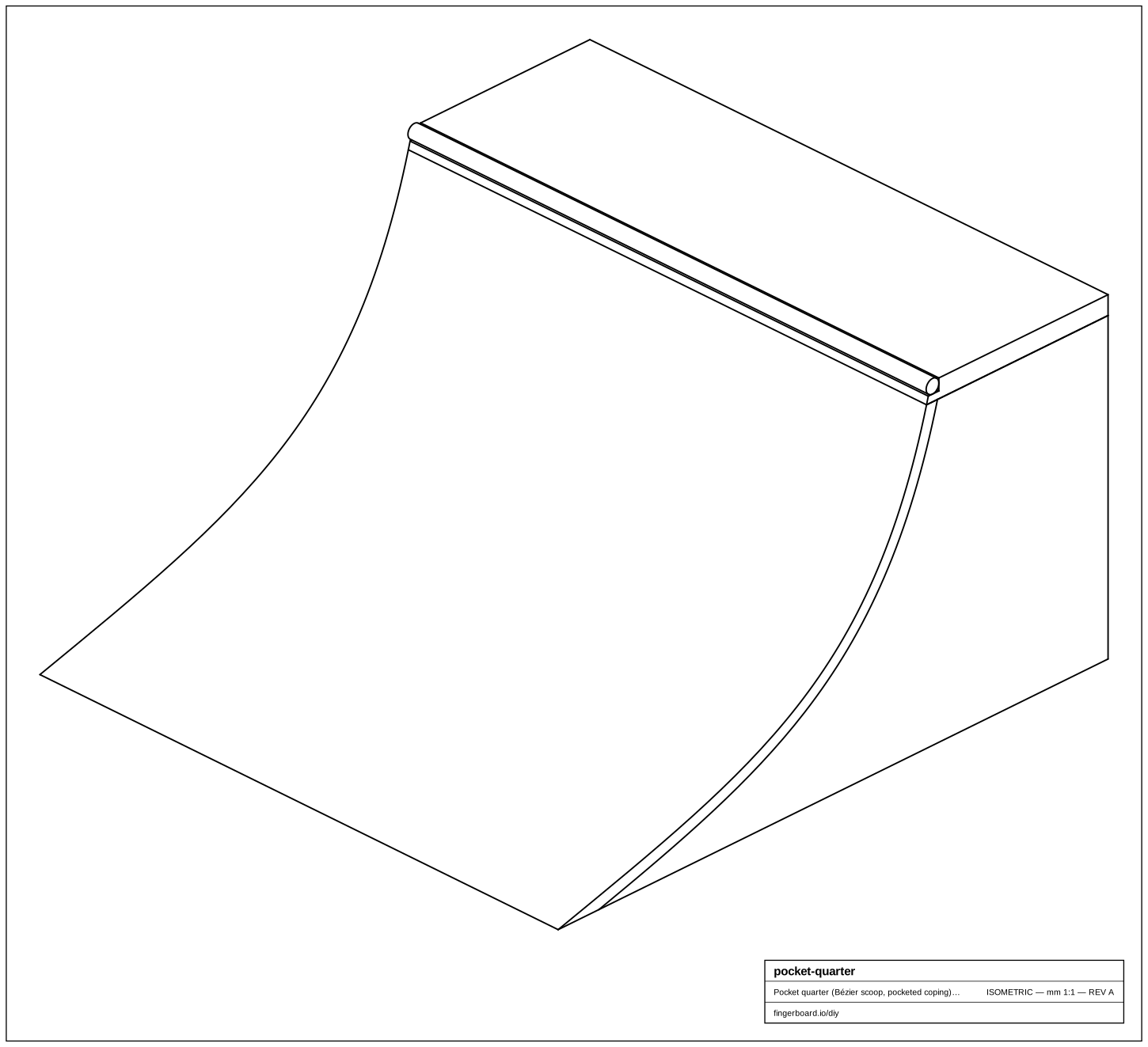
Pocket Quarter
A medium, low quarter pipe with round coping set into a pocket.
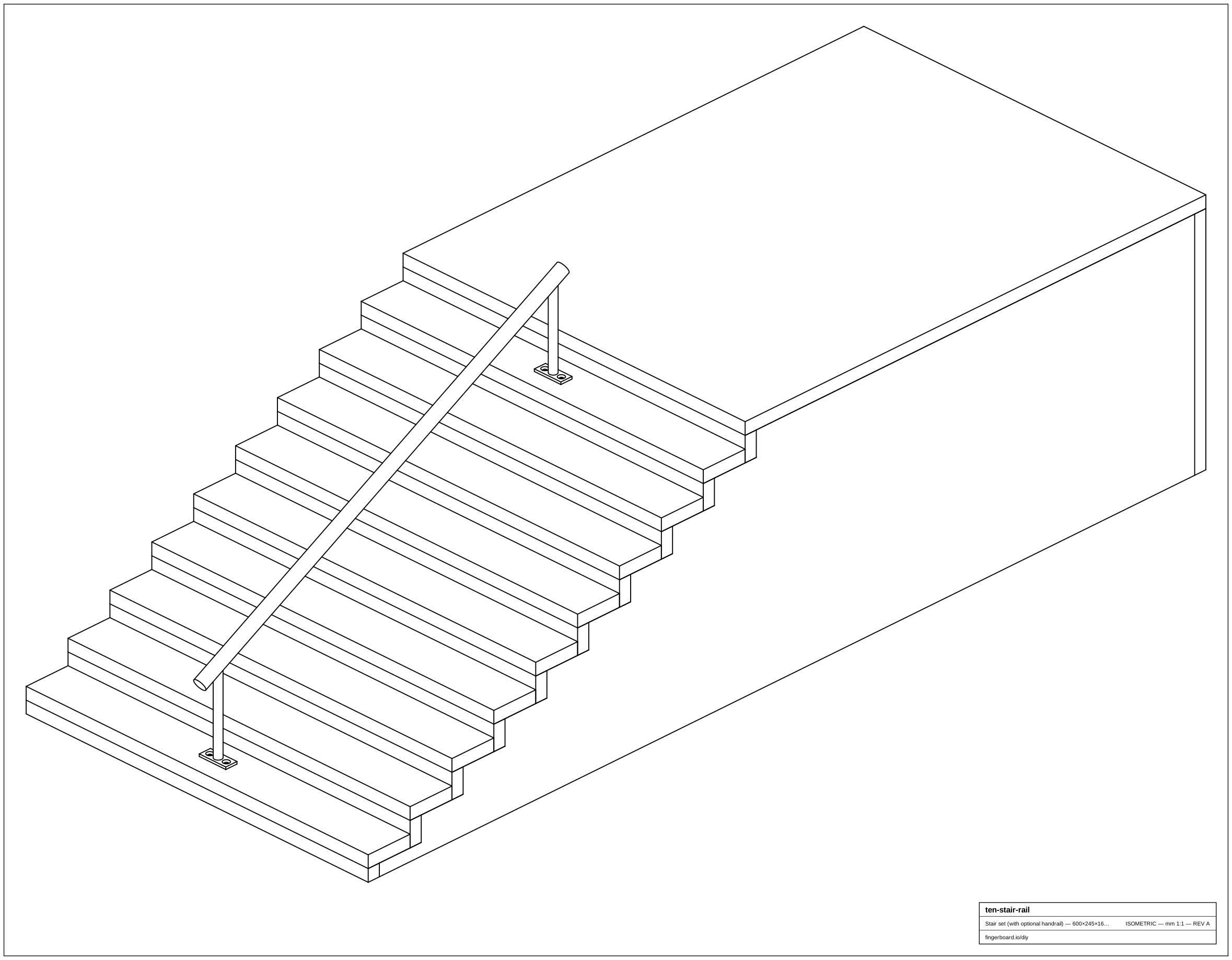
Ten Stair Rail
A large ten-step stair set with a handrail down one side.